
March 4, 2026
If you feel shoulder pain when bench pressing, overhead pressing, or pushing heavy weights, you’re far from alone.
Many people are told that imaging, especially MRI, will show exactly what’s wrong. But recent research shows that abnormal MRI findings are extremely common even in people without any shoulder pain at all.¹
Let’s talk about what that means, why your body can still adapt and get stronger, and what actually helps shoulder pain with pressing.
What the New Research Shows
A 2026 study published in JAMA Internal Medicine looked at MRI scans of adults between the ages of 41 and 76.¹
The results were striking:
- **About 96% of people without shoulder pain had at least 1 abnormal finding on MRI.**¹
- **About 98% of people with shoulder pain also had abnormal findings.**¹
In other words, abnormal MRI findings were present in 96% of asymptomatic individuals compared with 98% of symptomatic individuals.¹
That means nearly everyone in the study, whether their shoulder hurt or not, had something “abnormal” on imaging.
These findings included:
- Tendinosis
- Partial rotator cuff tears
- Full-thickness tears
- Labral changes
So if almost everyone has these findings, they cannot automatically be the cause of pain.
This isn’t entirely new information. Earlier systematic reviews have shown that rotator cuff tears are common in people without pain, and the likelihood increases with age.²
What This Means for You
If your MRI shows a tear or degeneration, that doesn’t automatically mean:
- You need surgery
- You need injections
- Your shoulder is damaged beyond repair
Many of these findings are similar to wrinkles on the skin — normal age-related changes.
Pain is more complex than what shows up on a scan.
Shoulder Pain With Pressing Is Often a Load Problem
When people develop shoulder pain with pressing, it’s often related to:
- Increasing training volume too quickly
- Strength imbalances around the shoulder
- Reduced rotator cuff endurance
- Poor scapular control
- A temporary mismatch between load and capacity
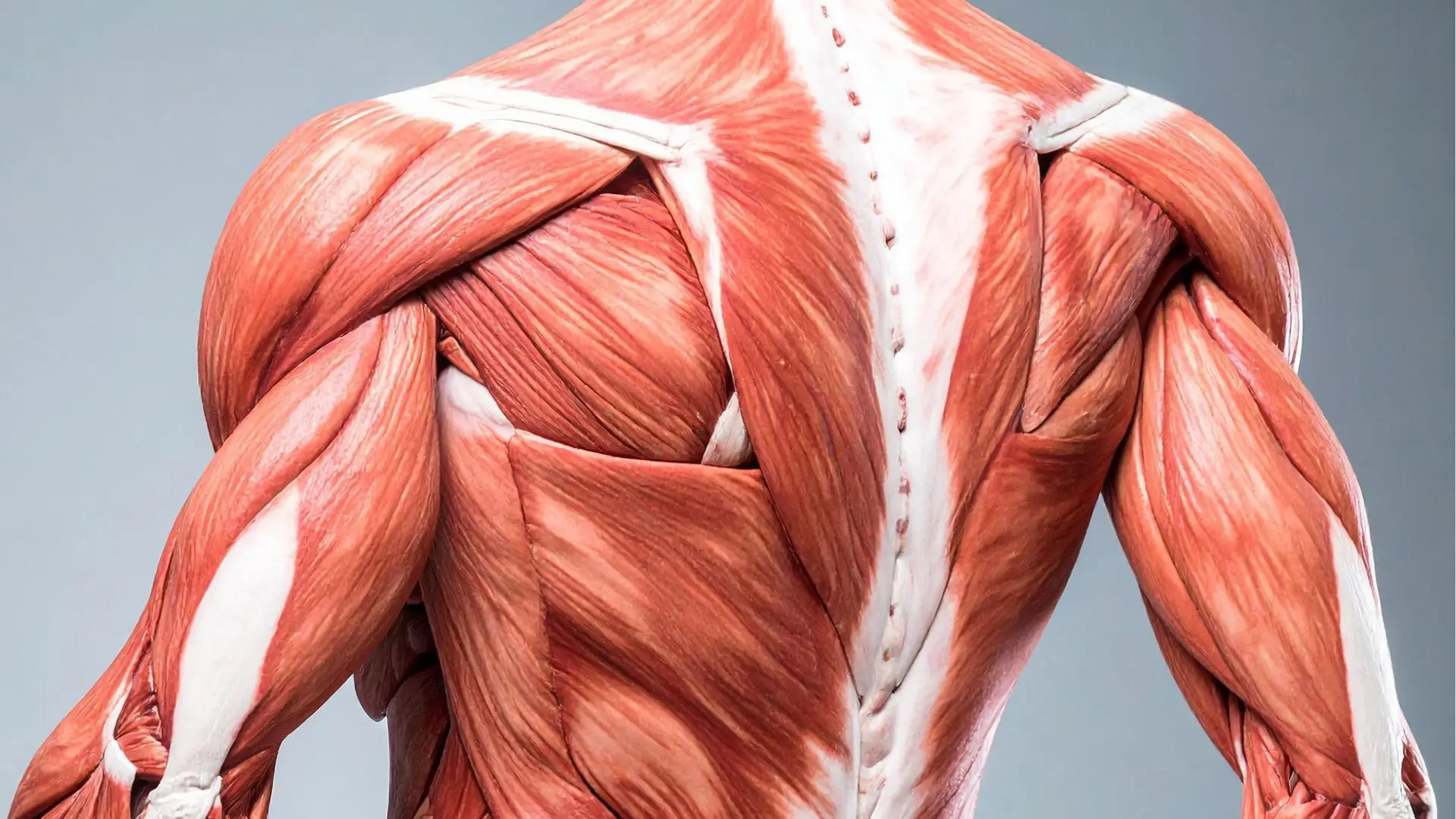
Pressing movements place high demand on the rotator cuff and surrounding muscles. If those tissues aren’t conditioned for the load, pain can develop, even if nothing is “structurally wrong.”
The Body Is Resilient and Built to Adapt
One of the most important things to understand about musculoskeletal pain is this:
➡ Pain does not always equal damage.
The body is adaptable.
Tendons remodel.
Muscles grow stronger.
Connective tissue becomes more tolerant of stress.
Research consistently supports exercise-based rehabilitation as the first-line treatment for rotator cuff–related shoulder pain.³
Even in the presence of tears or tendinosis on imaging, many people improve significantly with progressive strengthening.
When load is introduced gradually and appropriately, the shoulder often becomes stronger and more resilient than before.
This adaptability is why physical therapy works so well for shoulder pain, especially when the pain isn’t caused by a sudden traumatic injury.
Why Jumping Straight to Imaging Can Backfire
Because MRI findings are so common, imaging can sometimes:
- Increase fear
- Shift focus toward structural “damage”
- Lead to unnecessary procedures
- Reduce confidence in movement
A rotator cuff “tear” on MRI doesn’t automatically mean that tendon is the source of your pain.¹
Clinical practice guidelines recommend conservative care as the first-line approach for most non-traumatic rotator cuff–related shoulder pain.⁴
That usually means structured rehabilitation before considering invasive options.
When An MRI Is Helpful
Imaging is more appropriate if there is:
- A traumatic injury (like a fall or dislocation)
- Suspected instability
- Significant weakness or neurological symptoms
- Failure to improve after structured rehabilitation
But for gradual onset shoulder pain with pressing, strength development and load management are often the solution.
What Actually Helps Shoulder Pain With Pressing
Instead of focusing only on MRI findings, treatment should focus on:
1. Load Management
Temporarily adjust volume or intensity without completely stopping training.
2. Strength Development
Target:
- Rotator cuff muscles
- Posterior shoulder
- Scapular stabilizers
- Upper back
3. Gradual Reloading
Tissues adapt when stress is applied progressively.
4. Movement Optimization
Small adjustments in pressing mechanics can reduce irritation and improve tolerance.
When programmed correctly, most active adults can return to pressing without surgery.
Shoulder Pain Treatment in Akron-Canton
At Vitality Physical Therapy, we help active adults overcome shoulder pain without unnecessary rest, injections, or surgery.
We focus on:
- Mobility testing
- Strength testing
- Movement assessment
- Individualized load progression
- Building long-term resilience
- Building a program that helps you reach your performance goals
Your shoulder is not fragile.
It is adaptable.
And with the right plan, it can get stronger.
If shoulder pain is limiting your training, schedule a consultation and let’s build a plan to get you back to pressing confidently.
References
- Ibounig T, Järvinen TLN, Raatikainen S, et al. Incidental rotator cuff abnormalities on magnetic resonance imaging. JAMA Intern Med. Published online February 16, 2026. doi:10.1001/jamainternmed.2025.7903
- Teunis T, Lubberts B, Reilly BT, Ring D. A systematic review and pooled analysis of the prevalence of rotator cuff disease with increasing age. J Shoulder Elbow Surg. 2014;23(12):1913-1921. doi:10.1016/j.jse.2014.08.001
- Kuhn JE. Exercise in the treatment of rotator cuff impingement: a systematic review and a synthesized evidence-based rehabilitation protocol. J Shoulder Elbow Surg. 2009;18(1):138-160. doi:10.1016/j.jse.2008.06.004
- American Academy of Orthopaedic Surgeons. Management of rotator cuff injuries clinical practice guideline. Published 2019.

I’m Dr. Kayla Kerek
At Vitality Physical Therapy, we believe in empowering our clients to take charge of their health and wellness journey. Our dedicated team is here to provide personalized care tailored to your unique needs. Whether you’re recovering from an injury, looking to enhance your athletic performance, or simply seeking to improve your overall well-being, we are committed to helping you achieve your goals.
Check out the latest from Vitality Physical Therapy!